 Leaders Loop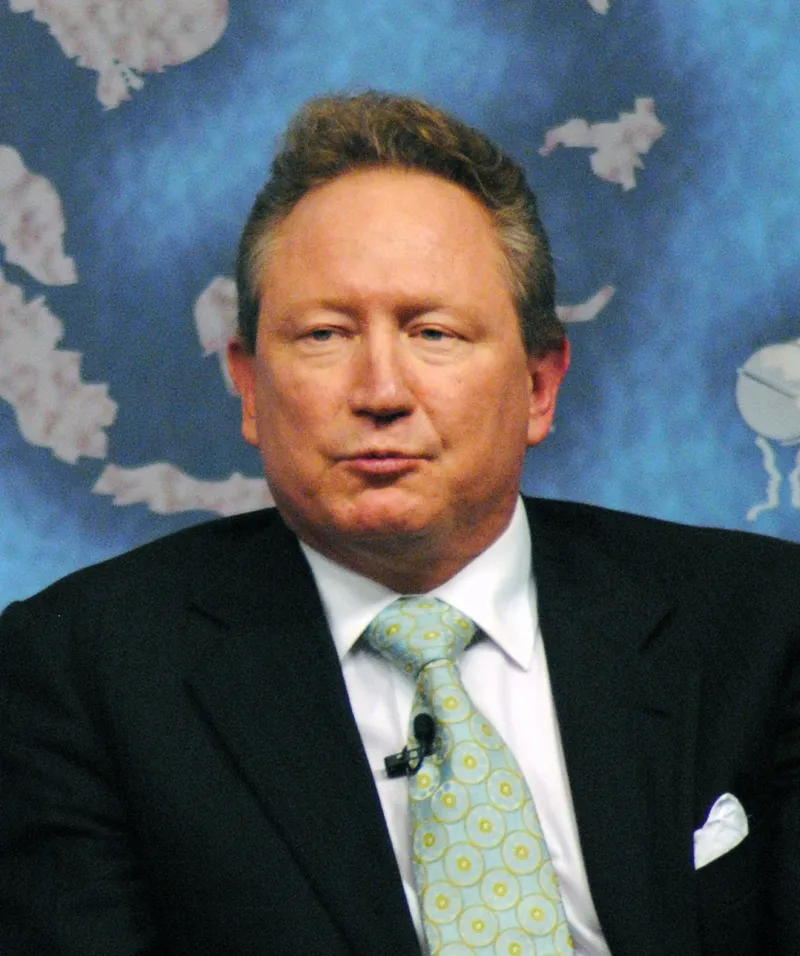
In late 2021, Andrew Forrest walked up to deliver the ABC's Boyer Lectures, the broadcaster's most prestigious annual platform, a lectern previously occupied by judges, scientists and prime ministers. He called the series Rebooting Australia. He called the opening lecture, with a candour that startled even his critics, Oil vs Water: Confessions of a Carbon Emitter.
It is hard to overstate how strange that title is. Forrest is the founder of Fortescue, one of the largest iron-ore producers on earth, a business that, by the nature of mining and shipping millions of tonnes of ore to China, burns enormous quantities of diesel and gas. Here was a man who had built a multi-billion-dollar fortune on heavy industry, standing on the national stage to confess. Not to deflect, not to greenwash, but to name himself plainly as part of the problem he was now asking the country to solve. The confession was the whole point. You cannot credibly demand that the world stop burning fossil fuels, his logic ran, unless you start with the emitter you know best.
The cattle station and the long way round
Forrest was born in Perth in November 1961 and raised at Minderoo Station, a vast pastoral holding in the Pilbara that his great-grandfather David had taken up in 1878 and that three generations of Forrests had managed since. He grew up among sheep and cattle in some of the most remote country in Australia, a childhood that left him, by his own telling, with a feel for land, water and the long timescales on which both reward or punish their custodians.
He read economics and politics at the University of Western Australia, then went into mining the hard way: founding Anaconda Nickel in the 1990s, being ousted from it in 2001, and in 2003 taking control of a tiny shell that he renamed Fortescue Metals Group. The conventional wisdom said an Australian junior could never break the iron-ore duopoly of BHP and Rio Tinto. Fortescue shipped its first ore to China in 2008 and, within a year, ranked as the country's third-largest iron-ore producer. The pattern was set early: take the bet the incumbents call impossible, then build the infrastructure that proves them wrong.
Slavery, oceans and a doctorate
Wealth, for Forrest, arrived alongside an unusually expansive idea of what to do with it. In 2001 he and his wife Nicola founded the Minderoo Foundation, now one of Asia's largest philanthropies. In 2010 he established the Walk Free initiative to campaign against modern slavery, and in 2013 it launched the Global Slavery Index, the first serious attempt to count, country by country, the tens of millions of people living in conditions of forced labour. The same year he signed the Giving Pledge, committing to give away most of his fortune.
Then, in his fifties, he did something few billionaires bother to do: he went back to school and earned a PhD in marine ecology from UWA, awarded in 2019. The doctorate was not a vanity credential. It fed directly into his alarm about ocean health and overfishing, themes that run through the Boyer Lectures alongside climate. The marine scientist and the iron-ore magnate turned out to be the same man, looking at the same planet from two ends.
Andrew Forrest, at a glance
- Born
- 18 November 1961, Perth, Western Australia; raised at Minderoo Station, Pilbara
- Based
- Perth, Western Australia, Australia
- Role
- Founder & Executive Chairman, Fortescue
- Known for
- Building Fortescue into a major iron-ore producer; "real zero by 2030" green-hydrogen bet
- Education
- Economics & politics, University of Western Australia; PhD in marine ecology, UWA (2019)
- Philanthropy
- Co-founder, Minderoo Foundation (2001); founder of Walk Free and the Global Slavery Index
- Online
- fortescue.com · Minderoo Foundation
Net zero by 2050, or real zero by 2030
The confession on the Boyer stage was not rhetorical cover. It was the prologue to a genuinely radical thesis, one that puts Forrest at odds with almost every other major industrial leader on the planet. Where the corporate consensus has settled on "net zero by 2050", a target that leans on carbon offsets, accounting and a comfortably distant horizon, Forrest argues for something starker: "real zero", the actual elimination of fossil fuels from operations, and he set Fortescue the deadline of 2030 for its land-based operations rather than mid-century.
"Net Zero 2050 is a con. The world needs Real Zero now."
That line, delivered while releasing a detailed climate-transition plan, captures the whole posture. To Forrest, net zero is a way for companies to keep emitting today by promising to balance the books decades hence; real zero is the harder, honest version, where you simply stop burning the fuel. To back it he committed Fortescue to multi-billion-dollar renewable projects, a fleet of electric and hydrogen-powered mining trucks, and an attempt to catapult green hydrogen to market at industrial scale. He has framed the deadline not as an aspiration but as a hard commitment.
The catch, and the conviction
It would be dishonest to present the bet as already won. Forrest has himself conceded that some of his early green-hydrogen production targets will slip; the technology has proved harder and the economics tighter than the most optimistic timelines assumed. Critics note, fairly, that Fortescue still earns its money digging and shipping iron ore, and that a confession on a public stage is cheaper than a decarbonised supply chain. The gap between the rhetoric and the fully built reality is real, and it is where his legacy will be judged.
But the framing he set out in Confessions of a Carbon Emitter has outlasted the slogans. After visiting dozens of countries in a matter of months, Forrest concluded that the open question was no longer whether green hydrogen would become a global energy form, but who would be first to mass-produce it, and he intended that it be him. It runs straight from the boy on the cattle station to the man at the lectern: take the bet others call impossible, say out loud where you're part of the problem, and then try to out-build the doubt.
The confession, in the end, was never about guilt. It was a leadership move, the recognition that you cannot lead a transition you refuse to admit you are part of. Whether Fortescue hits 2030 or not, Forrest changed the question other industrial leaders are now obliged to answer: not when will you offset your emissions, but when will you stop?