 Leaders Loop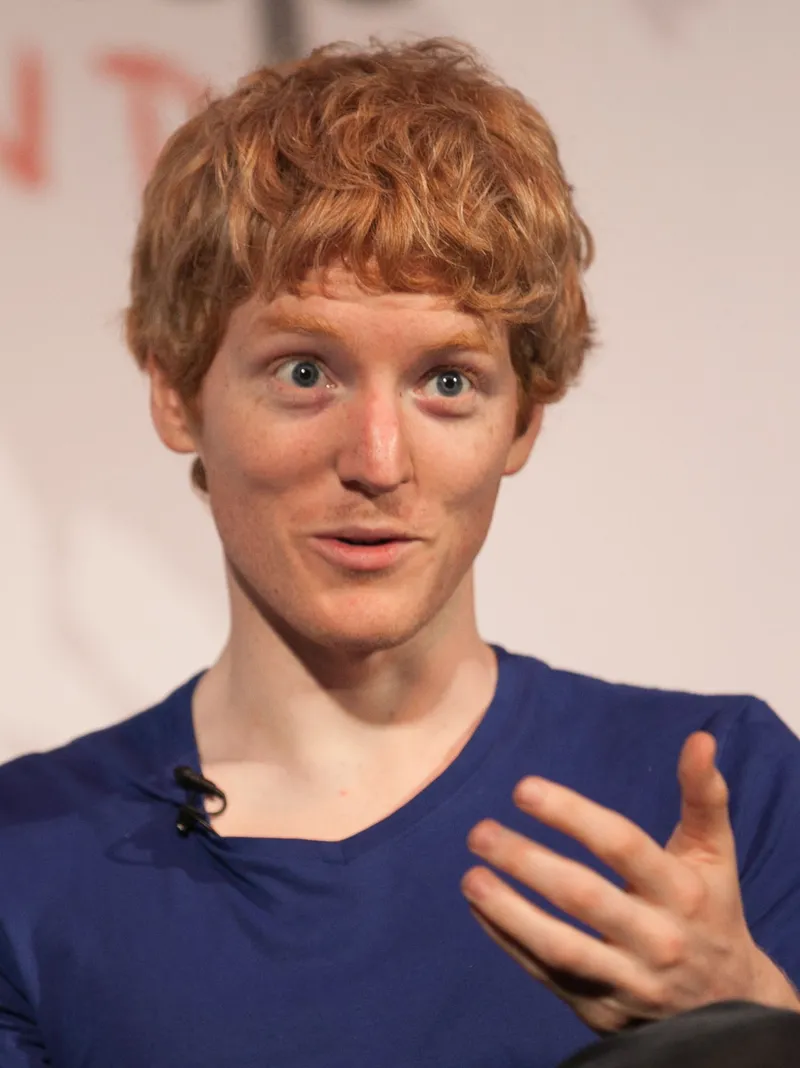
In July 2019, in the pages of The Atlantic, Patrick Collison and the economist Tyler Cowen made an argument that sounds, at first, almost too simple to be serious: that the thing which has done more than anything else to improve human life, progress, the long compound interest of better technology, science, institutions and ideas, is itself barely studied. We have whole disciplines devoted to the artefacts of progress. We have, they wrote, almost no field devoted to the question of how progress actually happens, and how we might get more of it.
Their essay, "We Need a New Science of Progress", did not so much describe a gap as name one into existence. The authors proposed inaugurating a discipline they called Progress Studies, and, against the usual fate of magazine think-pieces, people took them up on it. Within a few years there were conferences, funded researchers, a journal-adjacent literature and a small ecosystem of institutes. Essays that spawn movements are rare. Rarer still is one written by someone whose day job is running a payments company valued in the tens of billions.
A Limerick prodigy
Collison was born on 9 September 1988 in Limerick, in the west of Ireland, the son of a microbiologist and an electronic engineer. The prodigy stories are real and, unusually, well documented. In 2005, at sixteen, he won the BT Young Scientist and Technology Exhibition, Ireland's national showcase of teenage research, for a project built around a LISP-like programming language he had designed. The award was handed to him by the President of Ireland. He had taught himself to program years before that; later he went to the Massachusetts Institute of Technology, though he would not stay long enough to finish.
What he did instead was start companies. In 2007 he and his younger brother John founded a software venture in Limerick that, after a stint at the Silicon Valley accelerator Y Combinator and a merger with two Oxford graduates, became Auctomatic. On Good Friday in 2008 it sold to a Canadian buyer. Patrick was nineteen; John was seventeen. They were, by most accounts, millionaires before either could legally drink in the country they had moved to.
It would have been an easy life to coast on. Instead the brothers fixed on something tedious and enormous: in 2010, accepting a payment on the internet was still absurdly hard for an ordinary developer. The fix they built, founded that year, was Stripe.
The GDP of the internet
Stripe's house mission, to "increase the GDP of the internet", is the sort of line that could be empty branding, except that Collison treats it as a genuine claim about the world. As he has put it, the phrase is "our mission statement but also, importantly, our strategy", because the company's bet is on a non-zero-sum game: enable new businesses, new customers and new transactions, and the whole pie grows. Stripe's job, in this telling, is to remove a tax on commerce that most people had simply accepted as the cost of doing business online.
By 2016 the bet had made the Collison brothers among the youngest self-made billionaires in the world. But the more revealing detail, for anyone interested in how Collison leads, is not the valuation. It is the writing.
A company that writes
Stripe is unusual among large technology companies in how seriously it takes prose. Internally it is known for a documentation culture, written kickoffs, written retrospectives, a famously high standard for memos. Externally it runs Stripe Press, a book-publishing arm launched in 2018 whose tagline, "ideas for progress", reissues and commissions works about science, technology and how civilisations build. A payments company that also runs a small literary press is, on its face, a strange thing. It makes more sense once you understand that for Collison the writing is not a marketing flourish bolted on to the side. It is the same instinct as the essay: that ideas, taken seriously and written down well, are how progress actually compounds.
That instinct has a deeply personal home, too. Collison's personal website, widely read in technology circles, reads less like a CEO's landing page than a working notebook of curiosity: a bookshelf of everything he has read, pages on advice and on "fast" projects, and a now-famous list of open questions he doesn't know the answer to. It is, in miniature, the same conviction the Atlantic essay made loud: that the interesting move is to take understanding seriously enough to act on it.
Patrick Collison, at a glance
- Born
- 9 September 1988, Limerick, Ireland
- Based
- San Francisco, California, United States
- Role
- Co-founder & CEO, Stripe (founded 2010 with brother John Collison)
- Known for
- Stripe; co-founding the "Progress Studies" movement
- Education
- Studied at MIT (did not complete); won the BT Young Scientist and Technology Exhibition, 2005
- Online
- patrickcollison.com · collison.ie
"To treat, not merely to understand"
The sharpest line in the Atlantic essay is also the most operative, and it explains why a busy chief executive bothered to write it at all. Collison and Cowen were explicit that they did not want a purely academic exercise. They wanted a field that intervened in the world, one that could identify what actually causes progress and then push institutions, funders and founders to do more of it.
"Progress Studies is closer to medicine than biology: The goal is to treat, not merely to understand."
That sentence is the Rosetta Stone for the rest of him. It is why Stripe's mission is framed as a strategy rather than a sentiment; why the company writes things down; why its founder keeps a public list of unanswered questions. In each case the move is the same. Comprehension is not the destination; it is the route to doing something. Progress, in Collison's hands, is not a thing that merely happens to a civilisation. It is a thing a civilisation can choose, study, and accelerate, or fail to.
The wager beneath the work
It is fashionable, in technology, to be either a builder or a thinker. Collison's whole career is an argument that the distinction is false. The teenager who designed a programming language to win a science prize, the nineteen-year-old who sold a company, the chief executive who runs a book press and publishes essays about the philosophy of progress, these are not separate people taking turns. They are one person acting on a single wager: that the rate at which the world gets better is not fixed, that it depends on choices we are mostly failing to study, and that the failure is fixable.
Whether Progress Studies matures into a durable discipline or remains a stimulating provocation is still, fittingly, an open question, one Collison would likely be the first to add to his list. But the essay has already done the hardest thing an idea can do: it changed what a generation of ambitious people think is worth working on. For a man whose company exists to grow the size of the game everyone is playing, that may be the most characteristic achievement of all.