 Leaders Loop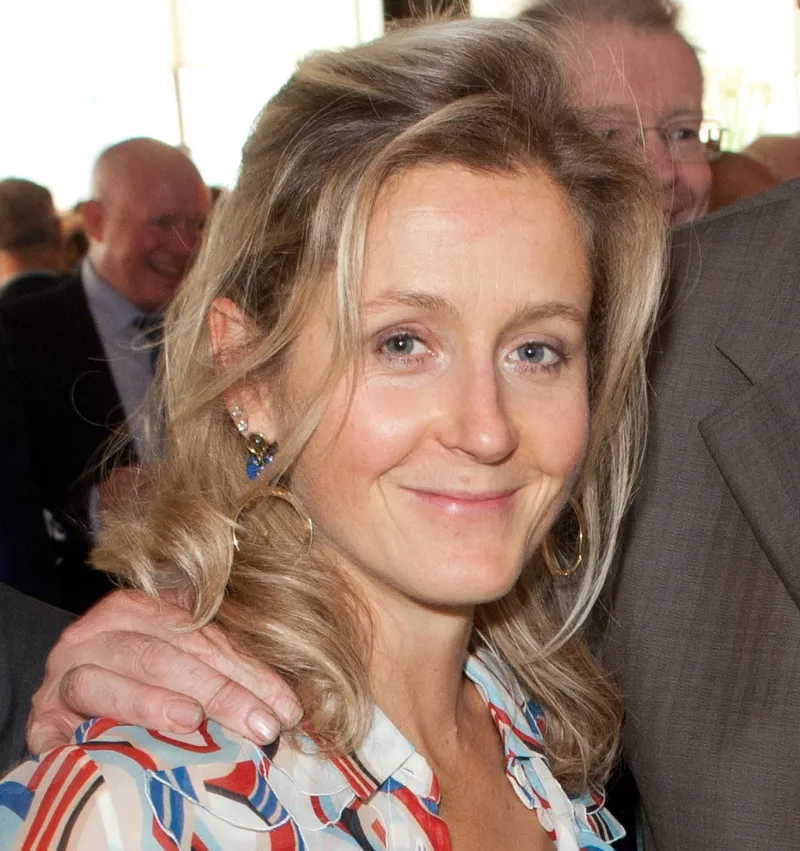
On the evening of 30 March 2015, the BBC handed its most prestigious annual platform, the Richard Dimbleby Lecture, to a woman who walks with two sticks and had spent the previous decade rebuilding herself, bone by bone, from a car crash that should have killed her. Martha Lane Fox could have used the slot to tell that story. Instead she used it to pick a fight with the future.
Her lecture was called "Dot Everyone", and its argument was deceptively plain. Britain, she said, had helped invent the modern web and was now squandering the lead. The country needed a new kind of public-interest institution, one she nicknamed Dot Everyone, to balance the commercial "dot coms" that were quietly becoming the dominant voices in how we live online. "It's time to balance the world of dot com," she told the room, "so I would call it DOT EVERYONE." The institution she imagined would do three things: teach the whole country to understand the internet, put women at the centre of technology, and force the moral and ethical questions of the digital age into the open. In 2015, that last item sounded almost eccentric. It does not sound eccentric now.
From a chip of the dotcom boom
The audience already knew the first act of her story. Born in London in 1973 and educated at Oxford High School, Westminster and Magdalen College, Oxford, Lane Fox was twenty-five when, in 1998, she and Brent Hoberman founded lastminute.com, a travel-and-leisure site built on the then-novel idea that empty hotel rooms and unsold theatre seats could be matched, at the last minute, to people who wanted them. It floated on the London Stock Exchange in March 2000, days before the dotcom bubble burst, and became one of the era's defining British names: dizzying valuation, brutal correction, and Lane Fox the young public face of an entire boom. She stepped back from day-to-day management in 2003; the business was eventually sold to Sabre in 2005.
Then, in May 2004, on holiday in Morocco, she was in a catastrophic car accident near Essaouira. By her own account she broke 28 bones, suffered a stroke, and underwent dozens of operations over years of recovery. She has spoken candidly about how the money she made at lastminute.com bought her medical care most people could never afford, a fact she does not flinch from, and one that arguably sharpened the egalitarian streak running through everything she did next. The crash did not end her public life. It reordered its priorities.
The making of a digital conscience
What followed was a steady migration from entrepreneur to public servant. In 2009 the government named her the UK's Digital Champion, charged with getting the millions of Britons who had never been online onto the web, and, more consequentially, with rethinking how the state itself behaved online. Her 2010 review is widely credited as the spark behind the Government Digital Service and the GOV.UK platform, since copied by governments around the world. In 2012 she set up the charity Go ON UK to attack the digital-skills gap directly.
The through-line is hard to miss. lastminute.com proved she understood the commercial internet; the Digital Champion years proved she cared about the people it left behind. The Dimbleby Lecture was where those two halves fused into a thesis, that the web is too important to be left entirely to the market, and that the public deserves an institution working on its behalf.
"Let's make the UK the best place to be a female technologist in the world. Now."
That line, delivered near the end of the lecture, was not rhetorical garnish. She put a number on it: women made up about 14% of the tech sector, she said, a smaller share than the 24% she counted in the House of Lords. An industry shaping everyone's life could not credibly do so while built largely by one half of the population. It was a structural critique of an industry at the height of its swagger, made years before the phrase "diversity in tech" became a conference fixture.
Dot Everyone, built
Lectures are easy to applaud and easy to forget. Lane Fox did the harder thing: she built the institution she had described. The campaign launched in the lecture became the charity Doteveryone, which she chaired and which spent the following years doing exactly the unglamorous work she had called for, researching how technology actually affected people's lives, pushing the idea of "responsible technology" into industry and government, and arguing that ethics had to be designed in, not bolted on. Doteveryone wound down in 2020, but the vocabulary it championed, responsible tech, public-interest technology, designing for the people who lose out, is now the air that policy conversations breathe.
Martha Lane Fox, at a glance
- Born
- 10 February 1973, London, United Kingdom
- Based
- London, United Kingdom
- Role
- President, British Chambers of Commerce; crossbench peer, House of Lords (Baroness Lane-Fox of Soho)
- Known for
- Co-founding lastminute.com; the 2015 "Dot Everyone" Dimbleby Lecture and the Doteveryone charity
- Education
- BA, Ancient & Modern History, Magdalen College, University of Oxford
- Also
- UK Digital Champion (2009–13); board roles at Chanel and WeTransfer; former Twitter director; Chancellor of the Open University (2014–, now stepping down)
- Online
- Wikipedia · blog
From campaigner to institution
If the first half of Lane Fox's career was about disrupting institutions, the second half has been about joining, and steadying, them. Created a crossbench life peer in March 2013 as Baroness Lane-Fox of Soho, at the time the youngest woman in the House of Lords, she became a fixture of British public life: Chancellor of the Open University from 2014 (a role she is now stepping down from), a non-executive director of Chanel and of WeTransfer, and, until Elon Musk's 2022 takeover, a board member of Twitter, a vantage point on the platform's governance that few British figures shared.
In October 2022 she was elected President of the British Chambers of Commerce, the federation representing tens of thousands of UK businesses, an unmistakably establishment perch for a woman who built her name questioning the establishment's grip on the web. It is tempting to read that arc as a softening. It reads better as a strategy: she long ago concluded that change which sticks comes from inside the institutions that hold power, not only from the stage outside them. The Digital Champion who rebuilt GOV.UK from within Whitehall already knew that.
Why the lecture still matters
Return to the Science Museum stage in 2015 and what is striking is not how much Lane Fox got right about the technology, it is how much she got right about the governance. Her warning that "big commercial technology platforms" had become "the dominant voices" in debates that belong to everyone now reads less like prophecy than like a weather report for the decade that followed. The questions she insisted Britain confront, who is accountable for the systems that run our lives, whose voices build them, whose interests they serve, are the exact questions now consuming the age of artificial intelligence.
That is the quiet lesson in her career for anyone who leads. Lane Fox's enduring move was not the company or the peerage or the board seats. It was the refusal to treat the future as something that simply happens to a society, and the insistence that someone, on the public's behalf, ought to be in the room asking the awkward question early. She asked it in 2015, walking to the lectern on two sticks. A decade on, the rest of the world is finally catching up to the question.